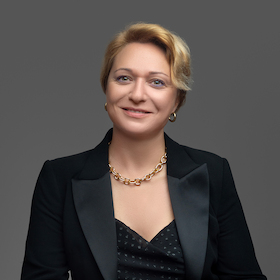
Münchener Kammerorchester
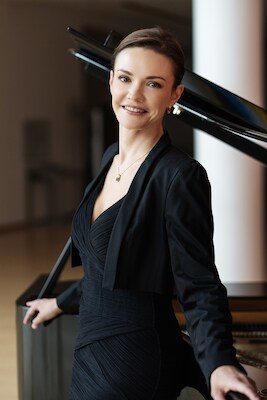
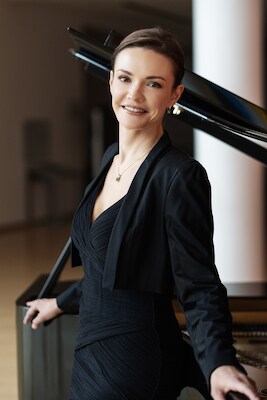
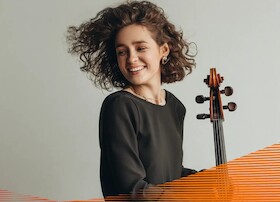
Anastasia Wladimirowna Kobekina is wild and intertwined with her cello: She was only four years old when she received her first cello lesson. The singing, sonorous instrument would never let go of Anastasia Kobekina. Born in 1994 in Yekaterinburg, Russia, she grew up in a musical household: Her mother is a pianist, and her father is a composer. At the age of twelve, she began her studies at the Moscow Conservatory, before continuing her education in Kronberg, Berlin, and Paris. Since 2012, Anastasia Kobekina has been living in Germany.
She grew up in an environment where music was part of everyday life. She was never forced to practice, she says. She was diligent out of an inner necessity, curiosity, and passion for music. She is also enthusiastic about performing her father's compositions, having recorded his works for cello.
It speaks to the artistic orientation of the 32-year-old musician that she performs with the exquisite Münchener Kammerorchester. Enrico Onofri, one of the three Associated Conductors of the Münchener Kammerorchester, embodies alongside Jörg Widmann and Bas Wiegers the wide artistic spectrum of the orchestra and the unyielding will to gain new dimensions in music from Baroque to the present day. This aligns with the cellist's musical understanding.
In this regard, one can be curious to see how Anastasia Kobekina interprets Haydn's Cello Concerto in C Major with the Münchener Kammerorchester. It is certainly not going to be boring and stilted!
The program with Mendelssohn Bartholdy's 3rd Symphony in the second half promises vitality and agility, which, given the "butterfly among Munich's top orchestras," should offer exciting interpretative approaches and soaring heights.
The juxtaposition with a work from New Music (yet to be named at the time of printing) will add additional allure to the evening: The Münchener are known and beloved for their varied program dramaturgy.
The picture-book career with significant competition successes of Anastasia Kobekina leads the lively and usually cheerful cellist to famous orchestras (Kremerata Baltica, Deutsche Kammerphilharmonie Bremen, Wiener Symphoniker). In collaboration with colleagues, illustrious names such as Isabelle Faust, Fazıl Say, or Vladimir Spivakov, Gidon Kremer, and András Schiff appear, to name just a few.
The young cellist enjoys traveling, and concerning her temperament, she appears to be quite akin to violinist Patricia Kopatchinskaja. She takes the solitude on concert tours calmly as a side effect of her solo vocation. Only the constant vigilance over her valuable Guadagnini cello from 1740 (a loan) that she carries with her almost all the time feels restrictive and physically demanding. Otherwise, she tries to also explore the cities of her tours aside from her concert performances. If possible, she extends her stay at the concert location. Sometimes, this leads to inspiration from the music of that city or country, as seen in her recording of "Venice" with works by Monteverdi, Vivaldi, and others, in an intimate, idiosyncratic interpretation.
Perfection and creativity are not contradictory for the young Russian, but rather cause amazement and enthusiasm among the audience.
Text: Sabine Kreimendahl

 Hallo, ich bin Maya.